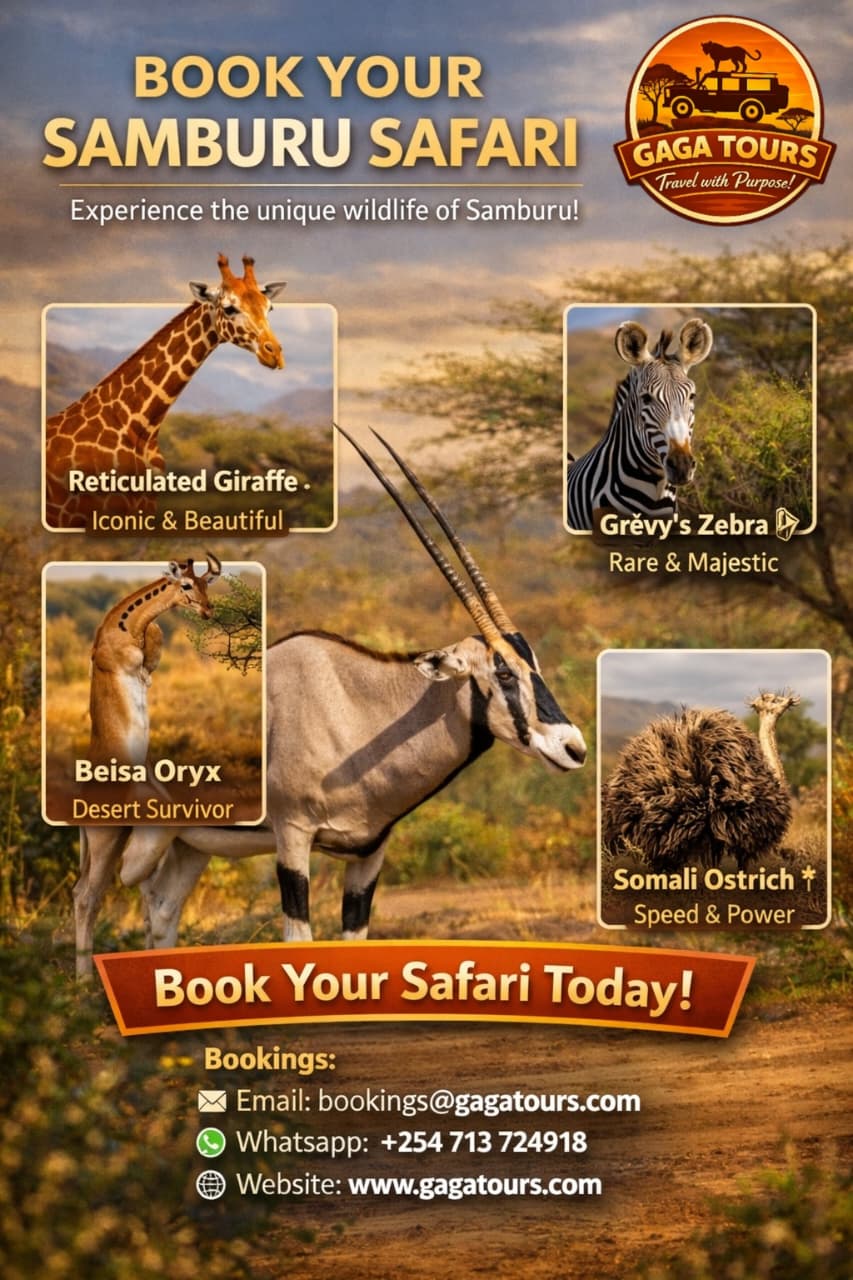
When travelers dream of the quintessential African safari, the conversation almost always begins and ends with the “Big Five.” The lion, leopard, elephant, rhino, and buffalo are legendary for a reason—they represent the raw, untamed power of the wild. But for the discerning adventurer looking for something rarer, something more intimate and unique, there is a different treasure hunt waiting.
In the sun-scorched, breathtakingly beautiful heart of Northern Kenya, the narrative shifts. Here, in the rugged wilderness of Samburu, the stars of the show aren’t the usual suspects. Instead, a group of extraordinary, endemic species known as the Samburu Special Five quietly steals the spotlight. Found almost nowhere else on Earth, these remarkable animals embody resilience, beauty, and masterful adaptation to one of Africa’s most challenging yet stunning landscapes.
If you want a safari that feels like discovery rather than a checklist, here is your guide to the five most elusive residents of Samburu.
1. The Reticulated Giraffe: Nature’s Geometric Masterpiece
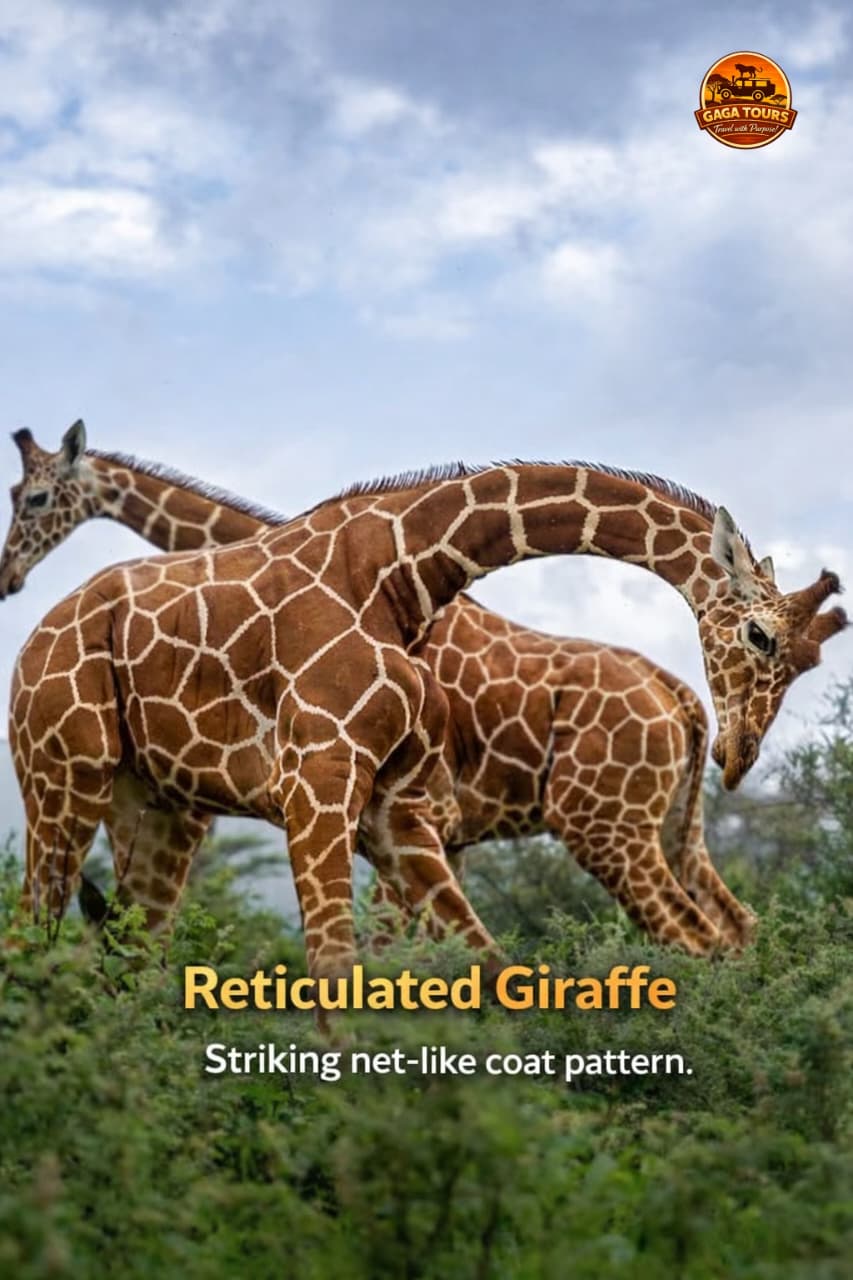
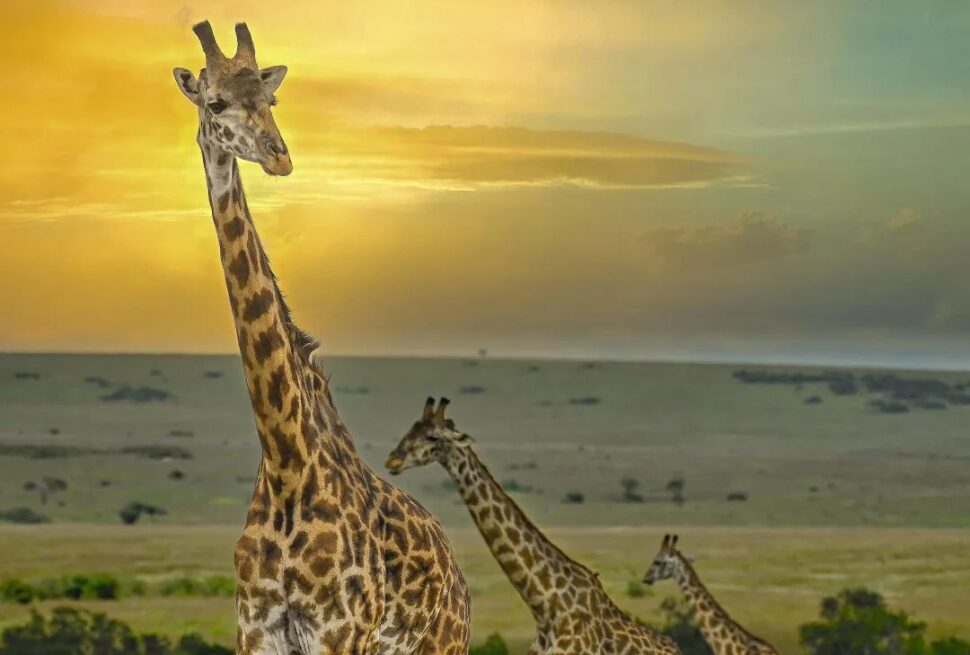
Forget the jagged, blotchy patterns of the Masai giraffe you see further south. In Samburu, the giraffes look as if they walked out of a high-fashion geometry textbook. The Reticulated Giraffe wears nature’s finest mosaic—a crisp network of bright white lines separating deep, rich orange-brown polygons.
Graceful doesn’t even begin to describe them. Watching these towering creatures stride silently across the dry riverbeds, bending their impossibly long necks to drink, is a moment of pure awe. Each pattern is unique to the individual, like a fingerprint. Because their habitat is shrinking elsewhere, Samburu has become a global stronghold for this subspecies. Seeing one silhouetted against a volcanic sunset is the definition of a “Kodak moment.”
2. Grévy’s Zebra: The Royal Stripes of the North
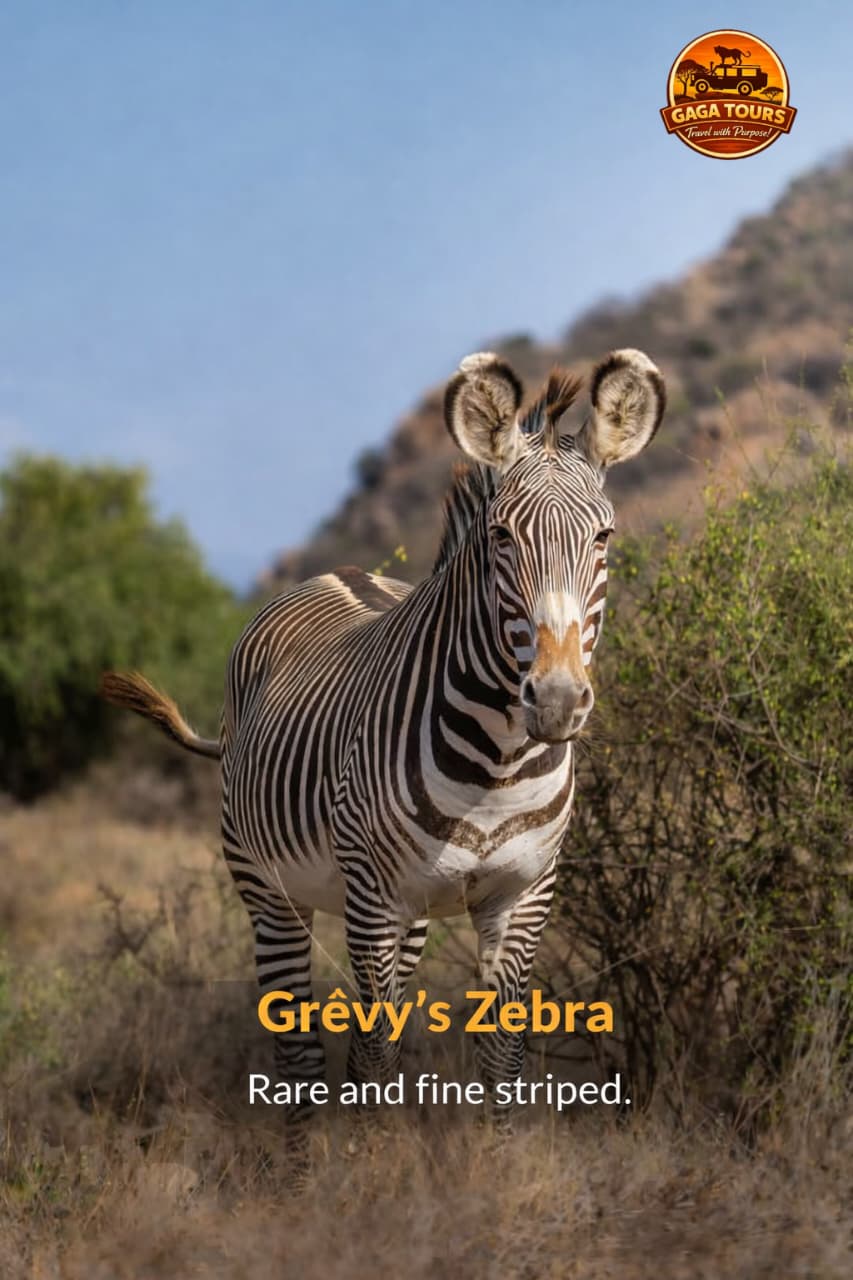
At first glance, you might say, “A zebra is a zebra.” But look closer. The Grévy’s Zebra is the largest, rarest, and most striking of all wild equids. Unlike the common plains zebra which has broad stripes stretching down to its belly, the Grévy’s boasts narrow, elegant pinstripes and huge, rounded, Mickey Mouse-like ears.
Nicknamed the “royal zebra,” its sleek design isn’t just for show. Those tight stripes act as a natural cooling system, creating convection currents that help regulate body temperature under Samburu’s blazing sun. Once widespread across the Horn of Africa, this magnificent animal now survives primarily in Northern Kenya. To see a herd of Grévy’s zebras drinking at a waterhole is to witness a living conservation success story—and a privilege few tourists ever experience.
3. The Beisa Oryx: The Desert Unicorn
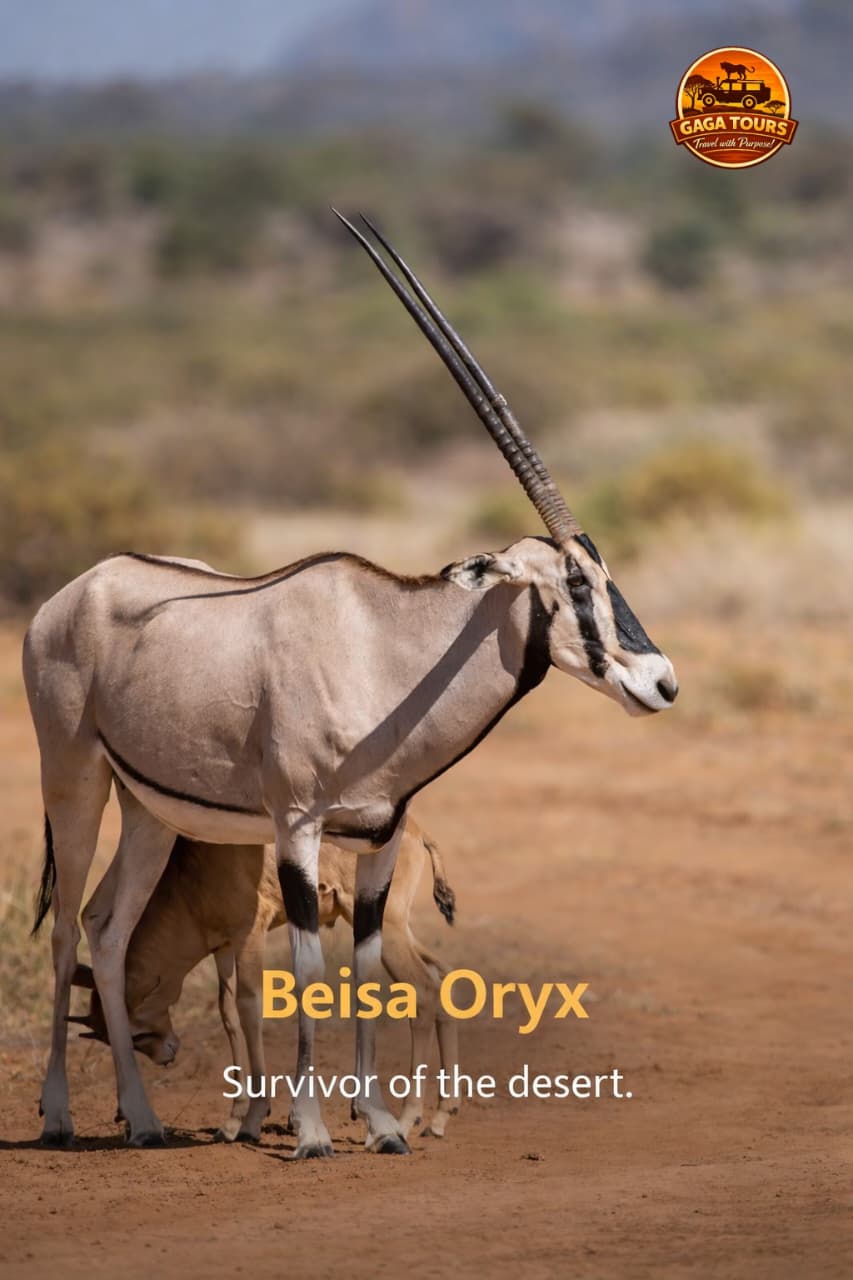
The heat in Samburu can be brutal, shimmering off the lava rock plains. Most animals would wilt, but the Beisa Oryx thrives. With a striking grey-brown coat, a black side-stripe, and a face mask that looks like it belongs on a Picasso painting, this antelope is built for survival.
Look closely at their heads—long, straight, spear-like horns (often called the “Desert Unicorn”) that can impale a lion if the predator gets too close. The Beisa oryx is a physiological marvel, capable of raising its body temperature to avoid sweating, thus conserving water. It can go weeks without drinking, drawing moisture from the dew-drenched melons and tubers it digs up. Watching them trot across the horizon with their heads held high, they don’t just look like survivors; they look like kings of the desert.
4. The Gerenuk: The Giraffe Gazelle
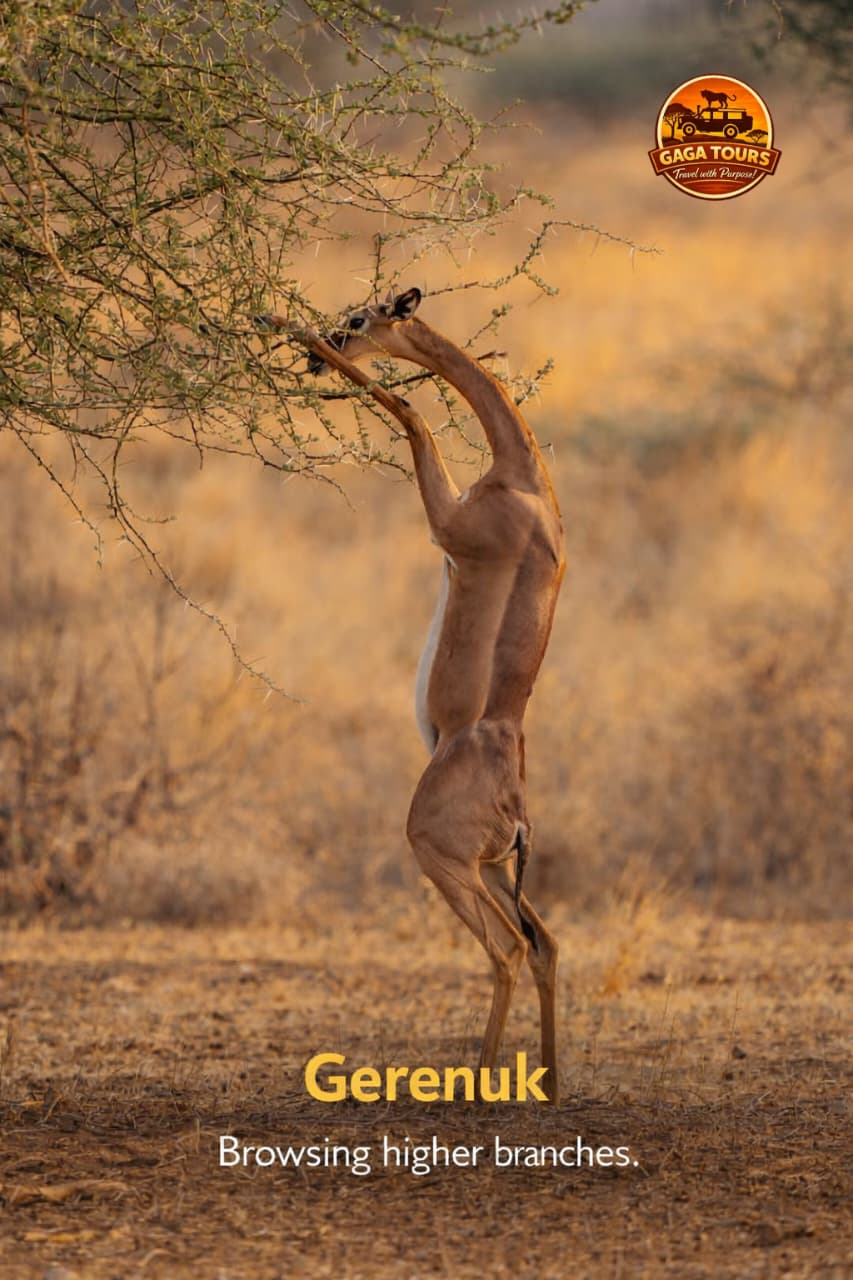
If evolution had a contest for “Most Unusual Feeding Technique,” the Gerenuk would win every time. Nicknamed the “giraffe gazelle,” this antelope has given up on grazing altogether.
While other antelopes fight over the grass at ground level, the Gerenuk simply stands up. Thanks to an incredibly elongated neck and a specialized pelvis that allows it to balance on its hind legs like a ballerina, the Gerenuk can reach leaves and acacia branches high above the ground. Watching one stretch its slender frame vertically, perfectly still except for its twitching ears, is a sight of pure, surreal elegance. They look like something out of a Dr. Seuss book—graceful, fragile, yet perfectly adapted to the thorny thickets of Samburu.
5. The Somali Ostrich: Speed and Power on the Plains
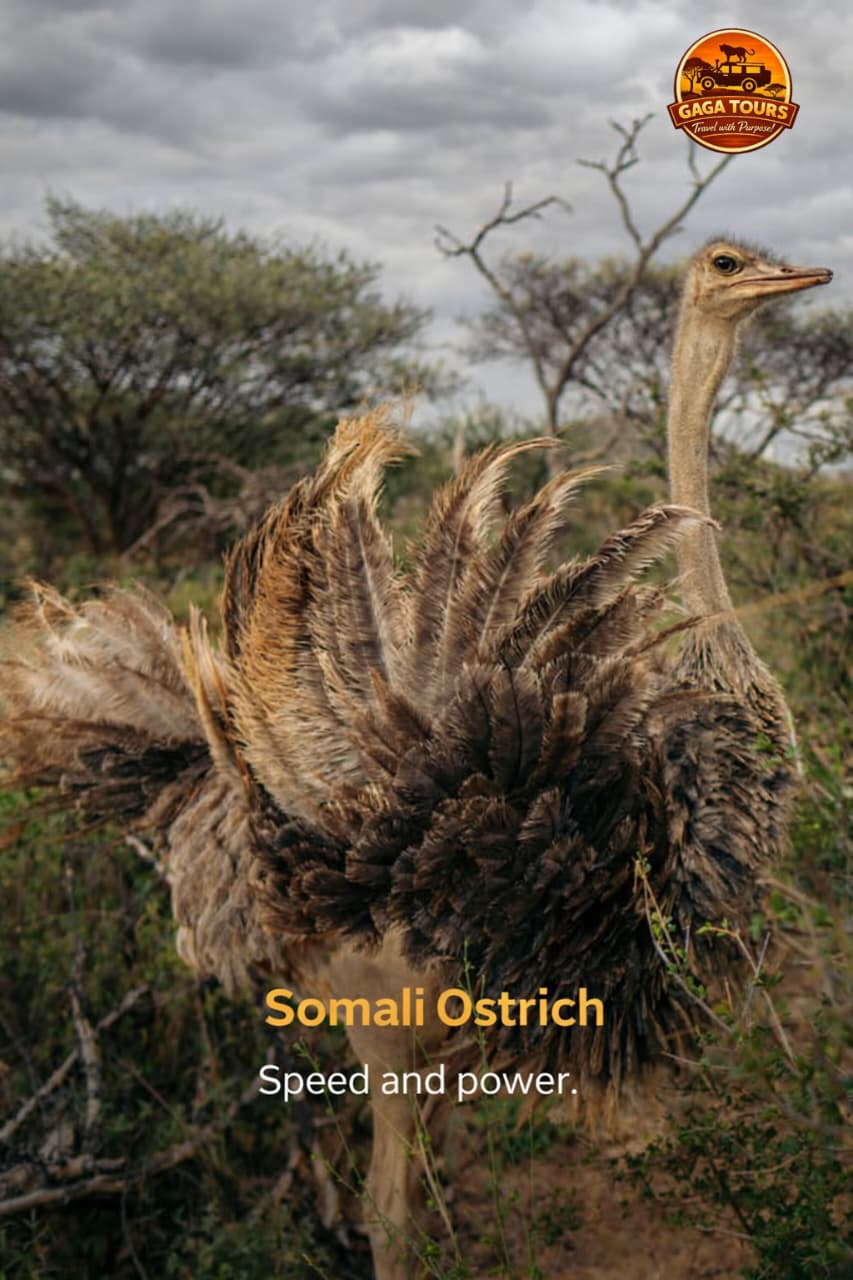
Last but certainly not least is the Somali Ostrich. Too large to fly, yet built for pure speed, this bird races across the savanna at up to 70 km/h (43 mph). It is often considered a separate species from the common ostrich, and Samburu is the best place to see it.
You can identify it easily: the males have deep, rich brownish-black plumage (as opposed to the common’s pinkish-red neck) but the most distinguishing feature is the legs. The Somali Ostrich has brilliant blue-grey legs that look like they belong on a speedboat. Their powerful kicks are a serious defense against predators. Seeing these massive birds sprint alongside your safari vehicle, throwing dust into the air, feels like watching a dinosaur race across the modern world.
The Heart of Samburu: Conservation and Community
The survival of these five incredible species is no accident. It depends on landscapes like Namunyak Conservancy, where community-led conservation protects both the wildlife and the Indigenous Samburu people who share their home. Here, tourism isn’t just an activity; it is the shield against poaching and habitat loss.
By choosing to stay in eco-sensitive camps (like the world-renowned Sarara Camp), visitors directly fund this cycle of protection. Every safari booked through Gaga Tours Kenya connects travelers to this living story of hope and resilience. You aren’t just taking photos; you are contributing to a future where the Reticulated Giraffe and Grévy’s Zebra still roam free.
Plan Your Adventure
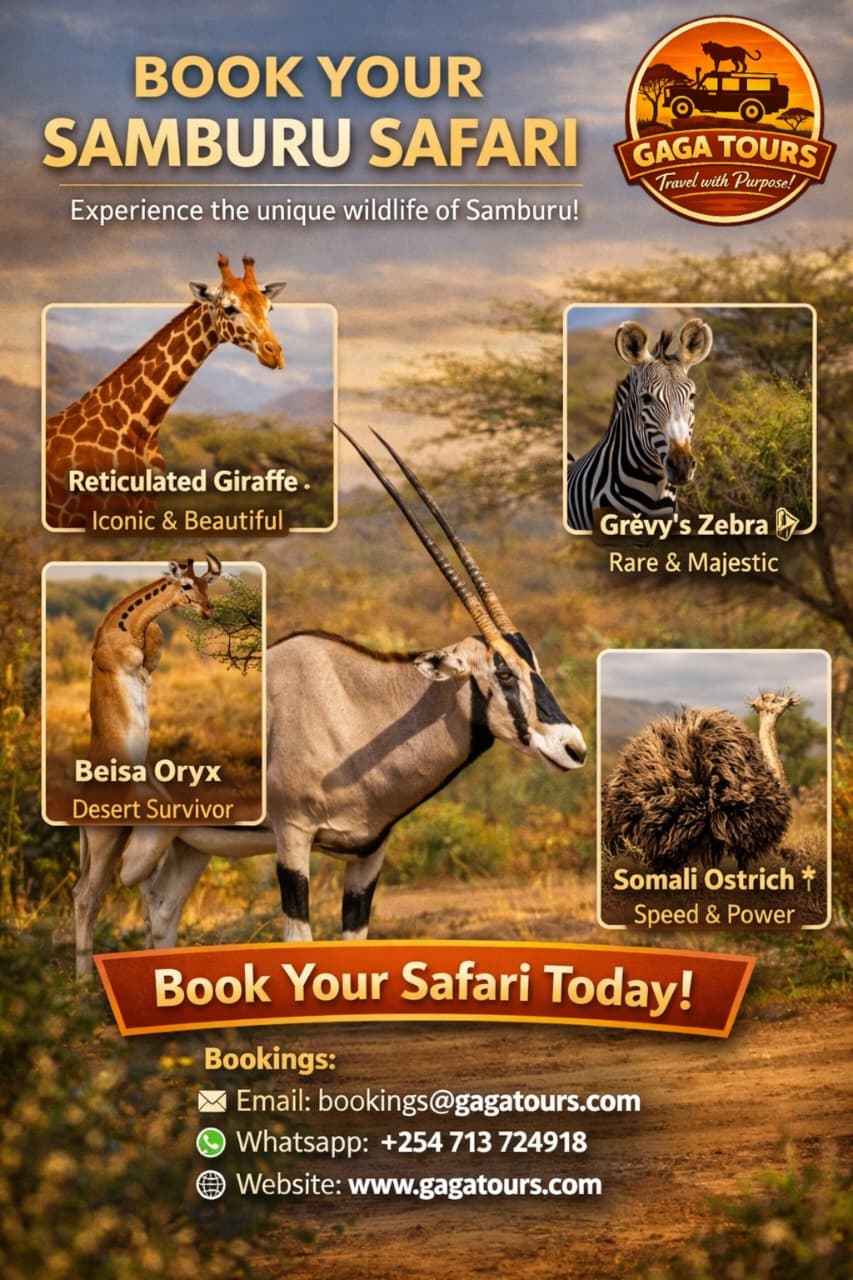
The Big Five are wonderful, but they are only half the story. For those ready to see what lies beyond the crowded reserves, the Samburu Special Five are waiting.
Ready to check them off your bucket list? Contact Gaga Tours Kenya today to design the ultimate Northern Kenya expedition.
- 📧 Email: bookings@gagatours.com
- 📱 WhatsApp: +254713724918
- 🌍 Website: www.gagatours.com
Step off the beaten path. The Special Five are calling.